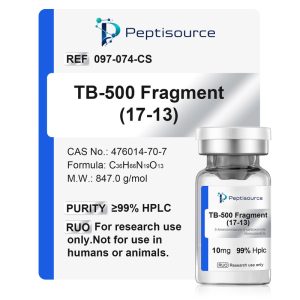
TB 500 fragment 17-13 10mg
$80TB500 fragment(17-13) Overview

Showing 49–64 of 65 results
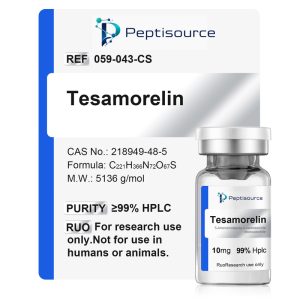
Tesamorelin is a synthetic growth hormone-releasing hormone (GHRH) analog. By mimicking the naturally occurring GHRH in the human body, it stimulates the anterior pituitary gland to release growth hormone (GH), thereby increasing the level of serum insulin-like growth factor I (IGF-I). In this way, Tesamorelin can regulate the body's growth hormone axis, affect the secretion and release of growth hormone, and thus have an impact on the body's metabolism, growth and development, as well as various physiological functions. Tesamorelin is mainly used to treat lipid metabolism disorders caused by antiretroviral therapy (ART) in HIV-infected individuals, especially the excessive accumulation of abdominal fat. In addition, it also shows certain potential in improving fat distribution, reducing visceral fat, and enhancing metabolic health.
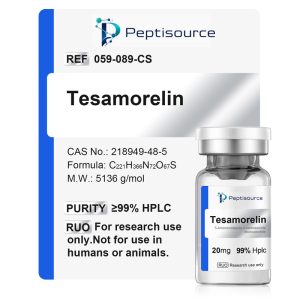
Tesamorelin is a synthetic analog of growth hormone-releasing hormone (GHRH), which is mainly used to treat the abnormal accumulation of abdominal fat in HIV-infected individuals caused by antiretroviral therapy, and it has significant clinical significance and multiple advantages. By mimicking the GHRH produced by the human body itself, it stimulates the anterior pituitary gland to secrete growth hormone, thereby increasing the level of serum insulin-like growth factor I. This, in turn, helps to consume visceral fat and optimize fat distribution. In addition to reducing abdominal fat, it can also optimize body composition, enhance muscle strength, and increase bone density.
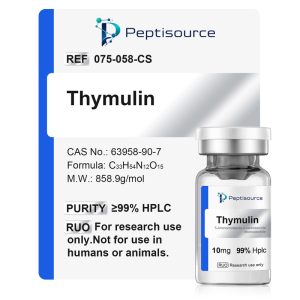
Thymulin is primarily produced by thymic epithelial cells and was initially termed "serum thymic factor" (FTS). It requires binding to carrier proteins and zinc ions (Zn⊃2;⁺) to exert its biological properties. As a neuroendocrine hormone, it possesses immunomodulatory functions and plays a key role in the differentiation of T lymphocytes, helping regulate the ratio of T helper cells to suppressor cells to normal levels.
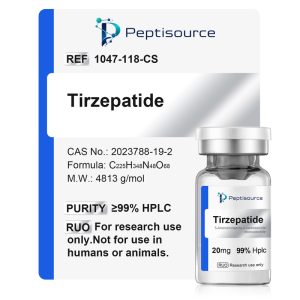
Tirzepatide is a GIP/GLP-1 dual receptor agonist that improves glycemic control in adults with type 2 diabetes and is also indicated for chronic weight management in adults who are obese or overweight and have weight-related complications.
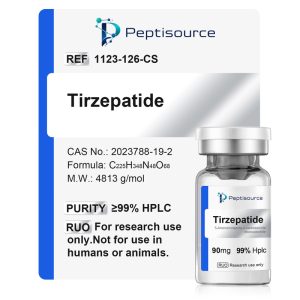
Tirzepatide, a synthetic polypeptide drug, is the first dual agonist of GLP – 1 and GIP receptors. Given via once – weekly subcutaneous injection, it regulates blood glucose through a dual – action mechanism. Activating GLP – 1 receptor promotes insulin secretion and inhibits glucagon release, while GIP receptor activation boosts insulin sensitivity and secretion.It also delays gastric emptying, increases satiety, reduces food intake, and helps with weight loss. Additionally, it raises adiponectin levels, improving insulin sensitivity and lipid metabolism.Clinical trials show Tirzepatide is better than single GLP – 1 agonists in blood glucose control, significantly lowering HbA1c. It's effective for weight loss (average > 20%) and obesity treatment. The once – weekly injection improves patient compliance, and it has fewer side – effects. It also benefits blood pressure and lipid profile, showing potential cardioprotection.
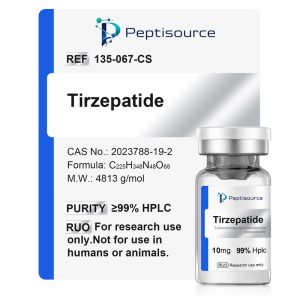
Tirzepatide is a synthetic polypeptide drug and the first dual agonist of glucagon-like peptide-1 (GLP-1) and glucose-dependent insulinotropic polypeptide (GIP) receptors. This drug can regulate blood glucose levels. Specifically, activating the glucagon-like peptide-1 receptor can promote insulin secretion and inhibit the release of glucagon; while activating the glucose-dependent insulinotropic polypeptide receptor can enhance insulin sensitivity and secretion ability.
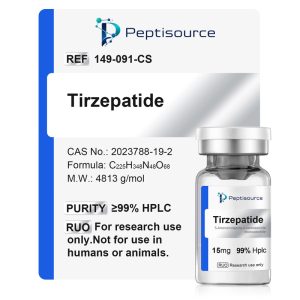
Tirzepatide, as the first dual agonist targeting both the glucagon-like peptide-1 (GLP-1) and glucose-dependent insulinotropic polypeptide (GIP) receptors, is capable of regulating blood glucose levels. Activation of the GLP-1 receptor stimulates insulin secretion and inhibits the release of glucagon, while activation of the GIP receptor enhances insulin sensitivity and insulin secretion. Additionally, Tirzepatide can delay gastric emptying, induce a sense of satiety, reduce food intake, and consequently contribute to weight loss. Moreover, it has the ability to elevate adiponectin levels, thereby improving insulin sensitivity and lipid metabolism.
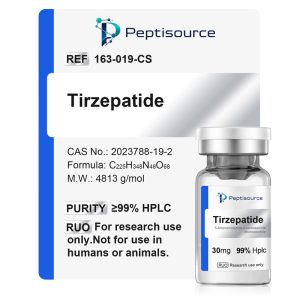
Tirzepatide is a GIP/GLP-1 dual receptor agonist that improves glycemic control in adults with type 2 diabetes and is also indicated for chronic weight management in adults who are obese or overweight and have weight-related complications.
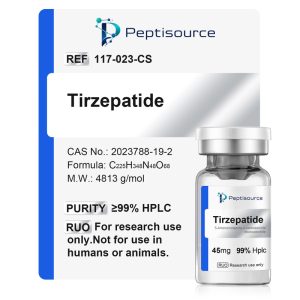
Tirzepatide, a synthetic polypeptide drug, is the first dual agonist of GLP – 1 and GIP receptors. Given via once – weekly subcutaneous injection, it regulates blood glucose through a dual – action mechanism. Activating GLP – 1 receptor promotes insulin secretion and inhibits glucagon release, while GIP receptor activation boosts insulin sensitivity and secretion.It also delays gastric emptying, increases satiety, reduces food intake, and helps with weight loss. Additionally, it raises adiponectin levels, improving insulin sensitivity and lipid metabolism.Clinical trials show Tirzepatide is better than single GLP – 1 agonists in blood glucose control, significantly lowering HbA1c. It's effective for weight loss (average > 20%) and obesity treatment. The once – weekly injection improves patient compliance, and it has fewer side – effects. It also benefits blood pressure and lipid profile, showing potential cardioprotection.
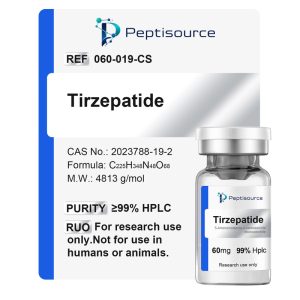
Tirzepatide is a synthetic dual incretin receptor agonist that exerts pharmacological effects by activating GIPR and GLP-1R. Designed based on natural incretin molecules with amino acid modifications to optimize stability and efficacy, it is the first approved GIP/GLP-1 dual agonist, introducing innovative solutions for treating type 2 diabetes and obesity.

Vesugen is a synthetic peptide composed of a specific amino acid sequence, which has the function of regulating various physiological processes in organisms. It exerts its biological effects by binding to specific targets within cells, influencing gene expression and cellular metabolism.

VIP (Vasoactive Intestinal Peptide) is an acidic polypeptide neurotransmitter composed of 28 amino acid residues, belonging to the vasoactive intestinal peptide/glucagon-like peptide family. Primarily synthesized and secreted by the central nervous system, gastrointestinal ganglia, and immune cells, it diffuses to target cells via blood or interstitial fluid. By binding to specific receptors, it exerts physiological effects crucial for vascular regulation, gastrointestinal function control, immune homeostasis, and neuroprotection.

VIP (Vasoactive Intestinal Peptide) is an acidic polypeptide neurotransmitter composed of 28 amino acid residues, belonging to the vasoactive intestinal peptide/glucagon-like peptide family. Primarily synthesized and secreted by the central nervous system, gastrointestinal ganglia, and immune cells, it diffuses to target cells via blood or interstitial fluid. By binding to specific receptors, it exerts physiological effects crucial for vascular regulation, gastrointestinal function control, immune homeostasis, and neuroprotection.
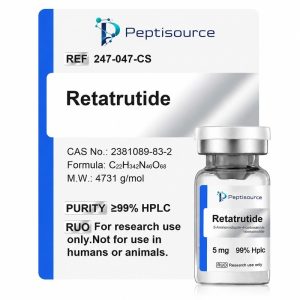
Retatrutide is a novel peptide-based drug that functions as a triple receptor agonist, simultaneously targeting GLP-1, GIP, and glucagon receptors. It facilitates weight loss through comprehensive regulation of appetite by enhancing satiety, suppressing hunger, and increasing energy expenditure. Additionally, Retatrutide demonstrates significant improvements in multiple cardiometabolic risk indicators including blood pressure, glycated hemoglobin (HbA1c), fasting blood glucose, insulin levels, total cholesterol, LDL cholesterol, and triglycerides. It also exerts positive effects on patients with non-alcoholic fatty liver disease (NAFLD), normalizing hepatic fat content in the majority of participants.
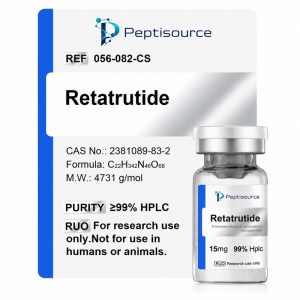
Retatrutide is a novel peptide-based drug that functions as a triple receptor agonist, simultaneously targeting GLP-1, GIP, and glucagon receptors. It facilitates weight loss through comprehensive regulation of appetite by enhancing satiety, suppressing hunger, and increasing energy expenditure. Additionally, Retatrutide demonstrates significant improvements in multiple cardiometabolic risk indicators including blood pressure, glycated hemoglobin (HbA1c), fasting blood glucose, insulin levels, total cholesterol, LDL cholesterol, and triglycerides. It also exerts positive effects on patients with non-alcoholic fatty liver disease (NAFLD), normalizing hepatic fat content in the majority of participants.
No products in the cart.