Oxytocin 10mg
$100Oxytocin is a nine-peptide hormone synthesized by neurons in the paraventricular nucleus and supraoptic nucleus of the hypothalamus.

Showing 33–48 of 65 results
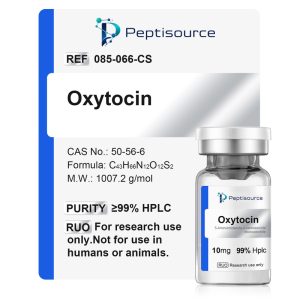
Oxytocin is a nine-peptide hormone synthesized by neurons in the paraventricular nucleus and supraoptic nucleus of the hypothalamus.
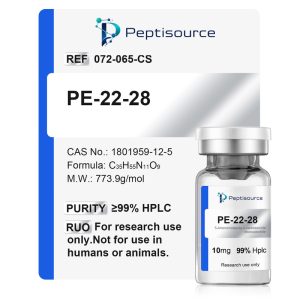
The peptide PE 22-28 is a 7-amino-acid peptide designed based on research into the endogenous peptide Spadin (PE 12-28), which exhibits antidepressant activity. PE 22-28 is a synthetic peptide composed of seven amino acids and serves as a short peptide analog.
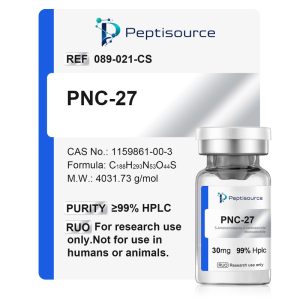
PNC-27 is a chimeric p53 penetrating peptide consisting of a structural domain (residues 12-26) in the p53 protein that binds to HDM-2 and a transmembrane penetrating peptide sequence. It forms a transmembrane pore by binding to HDM-2 protein in cancer cell membranes, leading to membrane lysis and necrosis of cancer cells, while being non-toxic to normal cells. This selective mechanism has led to significant anticancer activity in a variety of cancer cells (e.g., breast cancer, pancreatic cancer, acute myeloid leukemia, etc.). PNC-27 is unique in that its mechanism of action does not depend on the functional state of p53, which makes it potentially advantageous for the treatment of tumors that are refractory to conventional p53-dependent therapies. In addition, PNC-27 has shown synergistic effects with chemotherapeutic agents such as paclitaxel, further enhancing its therapeutic potential.
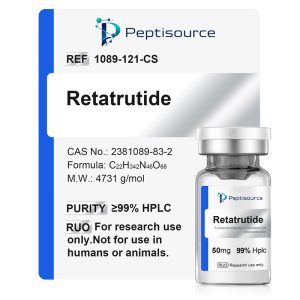
Retatrutide is a novel peptide drug. As a triple receptor agonist, it acts on the glucagon-like peptide-1 (GLP-1), glucose-dependent insulinotropic polypeptide (GIP), and glucagon receptors simultaneously. It helps individuals lose weight by comprehensively regulating appetite, enhancing satiety, suppressing hunger, and increasing energy expenditure.
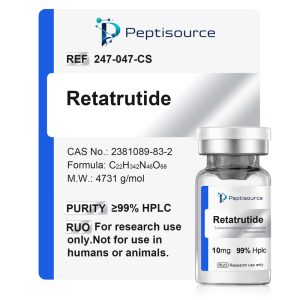
Retatrutide is a novel peptide-based drug that functions as a triple receptor agonist, simultaneously targeting GLP-1, GIP, and glucagon receptors. It facilitates weight loss through comprehensive regulation of appetite by enhancing satiety, suppressing hunger, and increasing energy expenditure. Additionally, Retatrutide demonstrates significant improvements in multiple cardiometabolic risk indicators including blood pressure, glycated hemoglobin (HbA1c), fasting blood glucose, insulin levels, total cholesterol, LDL cholesterol, and triglycerides. It also exerts positive effects on patients with non-alcoholic fatty liver disease (NAFLD), normalizing hepatic fat content in the majority of participants.
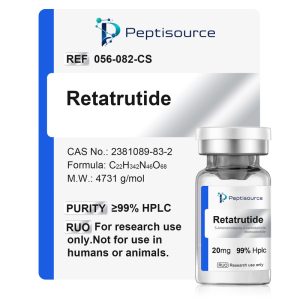
Retatrutide is a novel peptide-based drug belonging to the class of triple receptor agonists targeting GLP-1R/GIPR/GCGR, composed of 39 amino acids. Its design is inspired by endogenous intestinal insulin-like hormones (such as GIP) and, through structural optimization, it can simultaneously activate the GLP-1 receptor (GLP-1R), GIP receptor (GIPR), and glucagon receptor (GCGR). Activating GLP-1R promotes insulin secretion, inhibits glucagon release, lowers blood glucose levels, delays gastric emptying, and reduces appetite; activating GIPR enhances insulin secretion effects, further lowers blood glucose levels, and also plays a role in lipid metabolism; activating GCGR promotes energy expenditure, enhances hepatic gluconeogenesis inhibition, and reduces hepatic fat deposition.
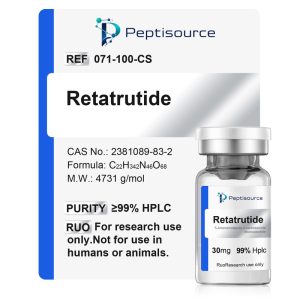
Retatrutide is a novel peptide drug. As a triple receptor agonist, it acts on the glucagon-like peptide-1 (GLP-1), glucose-dependent insulinotropic polypeptide (GIP), and glucagon receptors simultaneously. It helps individuals lose weight by comprehensively regulating appetite, enhancing satiety, suppressing hunger, and increasing energy expenditure.
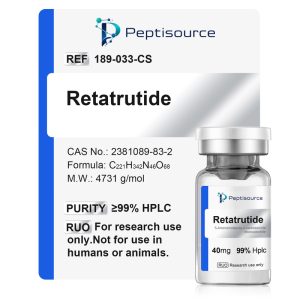
Retatrutide is a peptide drug acting as a triple agonist of the glucose-dependent insulinotropic polypeptide receptor (GIPR), glucagon-like peptide-1 receptor (GLP-1R), and glucagon receptor (GCGR), targeting conditions such as obesity and type 2 diabetes.
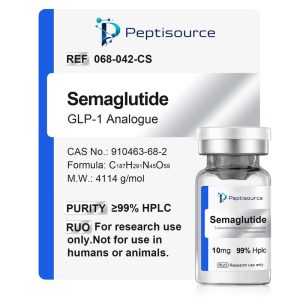
Semaglutide, as a long-acting glucagon-like peptide-1 (GLP-1) receptor agonist, is widely used in the clinical treatment of type 2 diabetes. The drug exerts multiple actions by mimicking the physiological effects of endogenous GLP-1: it promotes glucose-dependent insulin secretion, inhibits glucagon release, delays gastric emptying rate, and suppresses appetite, thereby achieving the dual objectives of glycemic regulation and weight management. Given its half-life of approximately seven days, a once-weekly subcutaneous administration regimen can be adopted in clinical practice; this pharmacokinetic property significantly improves patients’ treatment adherence.
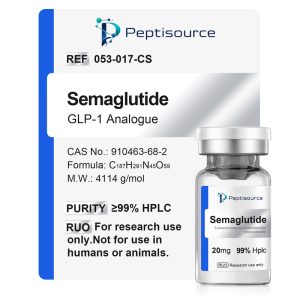
Semaglutide is a long-acting glucagon-like peptide-1 (GLP-1) receptor agonist that extends the half-life of natural GLP-1 through structural modification. It mimics the physiological effects of GLP-1, promoting insulin secretion in a glucose-dependent manner, inhibiting glucagon release, delaying gastric emptying, and enhancing satiety. It effectively controls blood glucose levels in patients with type 2 diabetes, significantly reduces body weight in obese or overweight individuals, and lowers the risk of cardiovascular events. It is a peptide with dual benefits of blood glucose control, weight loss, and potential cardiovascular protection.
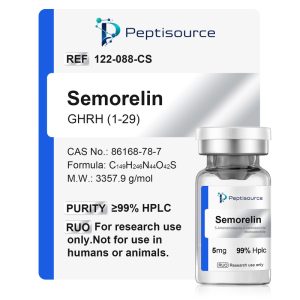
Sermorelin is a synthetic analog of growth hormone-releasing hormone (GHRH), exerting its effects by stimulating the pituitary gland to secrete the body’s natural growth hormone (GH). Its primary actions include promoting muscle growth, improving body composition, enhancing metabolism, and supporting tissue repair and regeneration. Unlike direct injection of synthetic growth hormone, Sermorelin maintains a physiological pulsatile release pattern of GH through natural stimulation of pituitary secretion, thereby reducing the risk of hormonal imbalance and offering a safer, more balanced approach to hormone replacement therapy. Additionally, Semorelin exhibits notable efficacy in promoting growth and development, particularly in the treatment of growth hormone deficiency, where it aids in improving muscle mass, reducing fat accumulation, and supporting overall health.
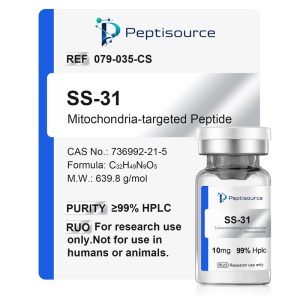
SS-31 is a mitochondria-targeting peptide drug used to treat a variety of diseases associated with mitochondrial dysfunction by protecting mitochondrial membrane function and improving energy metabolism. It binds to cardiolipin in the inner mitochondrial membrane, stabilizes mitochondrial structure and function, reduces reactive oxygen species production and enhances ATP production, thereby improving mitochondrial function. It is well tolerated and in some cases has been shown to significantly improve patients' vision, with significant supportive therapeutic effects especially in Leber's hereditary optic neuropathy (LHON). It has therapeutic effects in a variety of mitochondrial dysfunction-related diseases such as heart failure and neurodegenerative diseases, relieving symptoms and slowing disease progression.
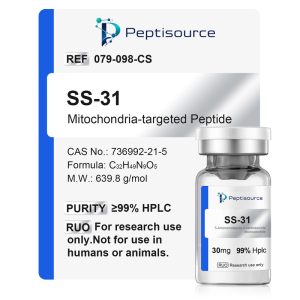
SS-31 is a small-molecule peptide composed of four amino acids. It contains partial D-type amino acids, exhibits strong resistance to protease degradation, and is also a cell-penetrating peptide. As a phospholipase A2 inhibitor and mitochondrial-targeted peptide, SS-31 specifically accumulates on the inner mitochondrial membrane and exerts its effects through multiple mechanisms.
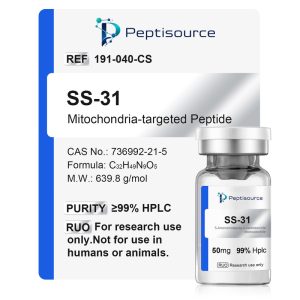
SS-31, also known as Elamipretide, possesses lipophilic characteristics enabling it to penetrate cell membranes and specifically localize to the inner mitochondrial membrane, demonstrating targeted action. As a mitochondrial-targeted peptide, SS-31 is molecularly engineered to interact with phospholipid components of the inner mitochondrial membrane, enabling precise regulation of mitochondrial structure and function. It is classified as a mitochondrial function modulator.
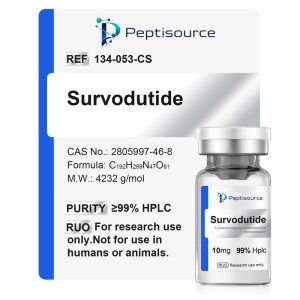
Survodutide is a new-generation dual agonist of the glucagon-like peptide-1 receptor (GLP-1R) and the glucagon receptor (GCGR), jointly developed by Boehringer Ingelheim and Zealand Pharma in Denmark.
No products in the cart.