Showing 17–32 of 65 results
-
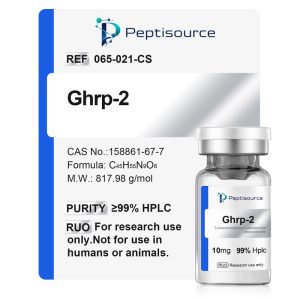
10mgHPLC99.558%
$65
GHRP-2 (Growth Hormone-Releasing Peptide-2) is a synthetic peptide compound that specifically binds to and activates growth hormone-releasing peptide receptors (GHSR) in the anterior pituitary and central nervous system, thereby promoting the synthesis and release of endogenous growth hormone (GH). Its action is independent of the growth hormone-releasing hormone (GHRH) pathway, enabling it to enhance GH secretion either independently or synergistically. It functions effectively under both basal and stimulated conditions and is primarily used in research on the growth hormone axis and related metabolic regulation.
View COA (Certificate of Analysis)
-
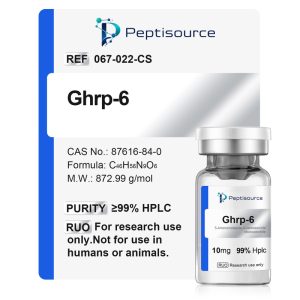
10mgHPLC99.362%
$67
GHRP-6 (Growth Hormone-Releasing Peptide 6) is a synthetic hexapeptide belonging to the Growth Hormone Secretagogues (GHS) family. Its core characteristic is the ability to specifically bind to the growth hormone secretagogue receptor (GHSR) in the pituitary gland and peripheral tissues, initiating related signaling pathways to regulate the synthesis and release of growth hormone (GH). It serves as a crucial substance for studying growth hormone regulatory mechanisms and associated physiological processes, currently primarily applied in the research field.
View COA (Certificate of Analysis)
-
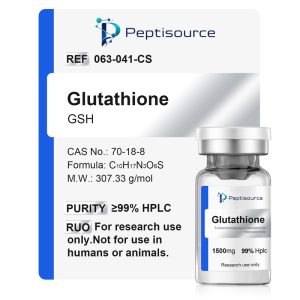
1500mgHPLC99.007%
$110
Glutathione, that is, GSH, is a tripeptide composed of glutamic acid, cysteine, and glycine, and its structural formula is γ-L-glutamyl-L-cysteinylglycine. It has important physiological functions in living organisms. As a key non-protein thiol compound within cells, it possesses multiple functions such as antioxidation, detoxification, and participation in the regulation of cellular metabolism, playing a crucial role in maintaining the normal function of cells and the stability of the internal environment.
View COA (Certificate of Analysis)
-
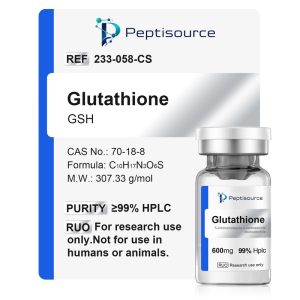
600mgHPLC99.394%
$50
Glutathione, also known as GSH, is a tripeptide composed of glutamic acid, cysteine, and glycine. Its structural formula is γ-L-glutamyl-L-cysteinylglycine. It possesses crucial physiological functions within organisms. As a key non-protein thiol compound in cells, it exhibits multiple effects such as antioxidant activity, detoxification, and participation in the regulation of cell metabolism, playing a vital role in maintaining the normal functions of cells and the stability of the internal environment.
View COA (Certificate of Analysis)
-
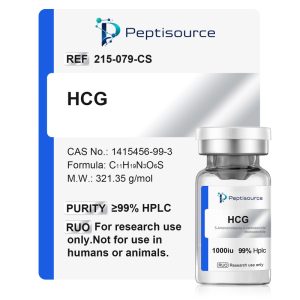
1000iu
$53
Human chorionic gonadotropin (HCG) is a glycoprotein hormone produced by placental trophoblast cells. It consists of α and β subunits. The α subunit shares structural similarities with those of pituitary – derived thyroid – stimulating hormone, luteinizing hormone, and follicle – stimulating hormone, while the β subunit is unique to HCG, giving it high specificity. After conception and implantation of the fertilized egg, trophoblast cells start secreting HCG, with levels rising rapidly as pregnancy progresses. Early pregnancy can be confirmed and its general status assessed by detecting HCG in blood or urine. Moreover, HCG is crucial for maintaining pregnancy and promoting corpus luteum development.
View COA (Certificate of Analysis)
-
2000iu
$86
Human Chorionic Gonadotropin (abbreviated as HCG) is a glycoprotein hormone secreted by the trophoblast cells of the placenta.HCG is composed of two subunits, α and β. The α subunit has a similar structure to the α subunits of thyroid-stimulating hormone, luteinizing hormone, and follicle-stimulating hormone secreted by the pituitary gland, while the β subunit is unique to HCG, which endows HCG with a high degree of specificity. After a woman becomes pregnant and the fertilized egg implants, the trophoblast cells begin to secrete HCG. As the gestational week increases, the HCG level rises rapidly. In the early stages of pregnancy, by detecting the HCG level in the blood or urine, it is possible to determine whether a woman is pregnant and the general situation of the pregnancy. In addition, HCG also plays an important role in maintaining pregnancy and promoting the development of the corpus luteum.
View COA (Certificate of Analysis)
-
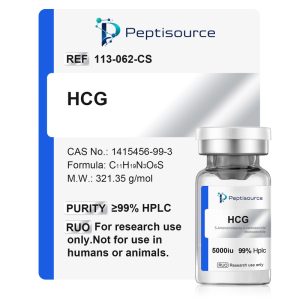
5000iu
$124
hCG, or human chorionic gonadotropin, is a glycoprotein hormone. Its core functions revolve around reproductive regulation, such as maintaining early pregnancy and influencing gonadal hormone secretion, making it one of the most important hormones in reproductive medicine.
View COA (Certificate of Analysis)
-
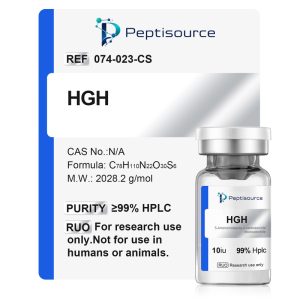
10iu
$105
HGH, or Human Growth Hormone, is a peptide hormone secreted by the anterior pituitary gland, composed of 191 amino acids. It plays a significant role in human growth and development by promoting bone and muscle growth, regulating metabolism (such as lipolysis and protein synthesis), and influencing glucose metabolism.
View COA (Certificate of Analysis)
-
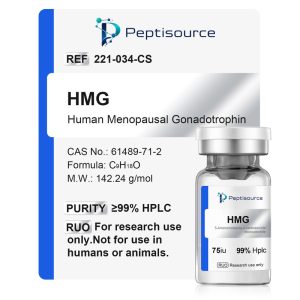
75iu
$143
Human Menopausal Gonadotropin (HMG) is an important gonadotropin widely used in the treatment of male infertility, specific types of female infertility, and assisted reproductive technologies.
View COA (Certificate of Analysis)
-
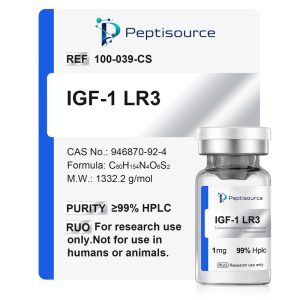
1mgHPLC99.305%
$282
IGF-1 LR3 is a synthetic long-acting analog of insulin-like growth factor 1 (IGF-1). Through structural modification, the glutamic acid at position 3 is replaced with arginine, with an additional 13 amino acids at the N-terminus, forming an 83-amino acid active molecule. Compared to natural IGF-1 (70 amino acids), its half-life extends to 20-30 hours with approximately threefold increased potency. It binds weakly to IGF-binding proteins, strongly binds to the IGF-1 receptor, and activates the PI3K/Akt and MAPK pathways.
View COA (Certificate of Analysis)
-
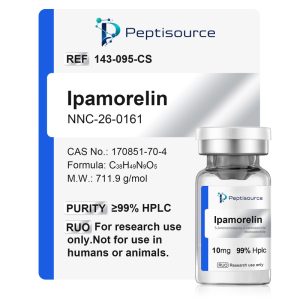
10mgHPLC99.487%
$72
Ipamorelin is a synthetic pentapeptide compound belonging to the growth hormone secretagogue family. Its core function is to potently stimulate the release of growth hormone and promote the synthesis of insulin-like growth factor-1 (IGF-1), thereby playing a role in regulating metabolism, promoting tissue repair, and supporting growth. Clinical studies have demonstrated that Ipamorelin can accelerate gastric emptying, improve symptoms of postoperative ileus, and alleviate non-inflammatory visceral and somatic pain through the regulation of relevant physiological processes. Compared with traditional growth hormone secretagogues, Ipamorelin exhibits higher selectivity for growth hormone release and does not significantly affect the secretion of other hormones (such as adrenocorticotropic hormone and cortisol). These unique advantages endow it with potential applications in the treatment of growth hormone deficiency, gastrointestinal motility disorders, and pain management.
View COA (Certificate of Analysis)
-
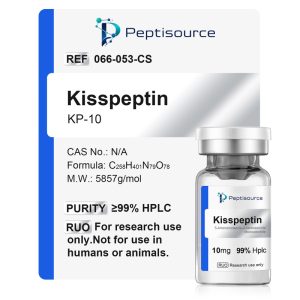
10mgHPLC99.742%
$115
Kisspeptin is a hypothalamic neuropeptide encoded by the KISS1/Kiss1 gene. Formally identified as a peptide hormone in 2001, it is encoded by the KiSS-1 gene and can be hydrolyzed to produce amidated short peptides of varying lengths, such as Kisspeptin-54, Kisspeptin-14, Kisspeptin-13, and Kisspeptin-10, all of which have arginine and phenylalanine at their C-termini. The receptor for Kisspeptin is KissR, also known as GPR54, a G protein-coupled receptor. Kisspeptin and its receptor are distributed in the brain and multiple tissues and organs.
View COA (Certificate of Analysis)
-
-
-
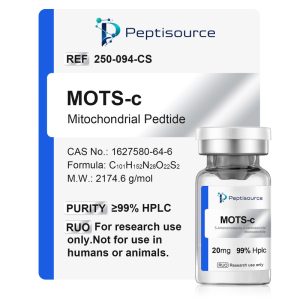
20mgHPLC99.483%
$163
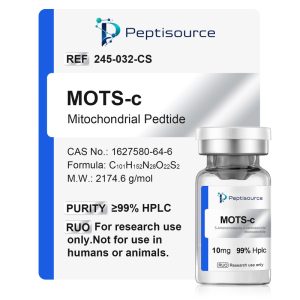
MOTS-c is a mitochondrial-derived peptide encoded by the 12S rRNA region of mitochondrial DNA, consisting of 16 amino acids. As a mitochondrial retrograde signal, MOTS-c can translocate to the cell nucleus under conditions such as metabolic stress, regulating the expression of a series of genes associated with metabolic dysfunction. It is widely distributed in various organ tissues such as the kidneys, heart muscle, and skeletal muscle, and is also present in plasma. It can cross the blood-brain barrier and regulate cellular energy balance, glucose, and lipid metabolism by activating the AMPK pathway, playing a crucial role in maintaining metabolic health. It has effects in improving insulin resistance, preventing type 2 diabetes, regulating fat metabolism, and protecting cardiovascular and neural health.
View COA (Certificate of Analysis)
-
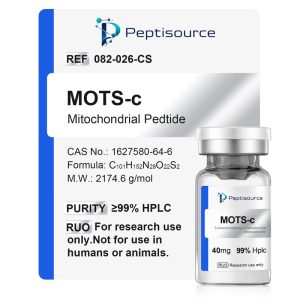
40mgHPLC99.028%
$306
MOTS-c is a mitochondrial-derived peptide. It is translated from the C-terminal region of mitochondrial 12S rRNA and contains 11–16 amino acids. As a retrograde mitochondrial signal, MOTS-c participates in regulating mitochondrial dynamics and exhibits multiple biological activities, including modulation of insulin sensitivity, metabolic homeostasis, and immunity.
View COA (Certificate of Analysis)